
Whether you’re a client looking to understand our process or a fellow videographer joining our team, this post offers a peek into the level of preparation we put into every shoot. While we take our work seriously, we’re all about keeping things efficient and enjoyable. After all, a smooth shoot starts with good vibes and great planning.
The Expectations: A Pro’s Guide to Shoot Day Prep
When we say “be prepared,” we mean be over prepared. Here’s what we expect from ourselves and any videographer working with us:
- Equipment Prep Starts the Day Before – For those early morning shoots, preparation isn’t something you leave until the morning of. Every piece of gear should be checked and double-checked the day before.
- Test, Test, and Test Again – If you’re using a new setup or a different camera configuration, run a full test. That means recording sample footage, checking audio levels, and reviewing everything to ensure it’s all working seamlessly.
- Backup Plans Are Your Best Friend – Assume that something will go wrong. Camera failures, audio dropouts, SD card errors—you name it. Be ready with backups, so no matter what, you’ll still capture the key moments.
The Pre-Shoot Checklist
A smooth shoot is all about attention to detail. Here’s our ultimate checklist to make sure nothing is overlooked:
1. Review the Project Brief
- Read through the brief and all client communications to ensure you’re clear on expectations.
- Print out a hard copy of the brief to have it handy on set.
2. Camera Prep
- Resolution & Frame Rate: Set your cameras to the desired resolution, frame rate (e.g., 25fps or 50fps), and picture profile. Save recall settings to switch between setups quickly.
- SD Cards: Format all SD cards to start with a clean slate. There’s nothing worse than running out of space mid-shoot.
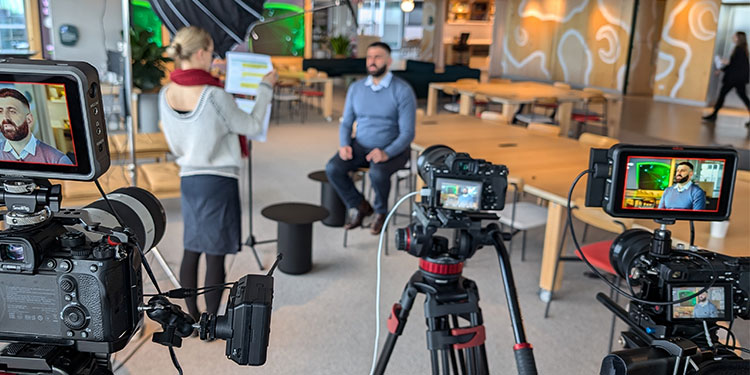
- Lenses: Plan your lens setups, especially for multicam shoots. Attach the necessary lenses to each camera in advance so they’re ready to go.
- Batteries: Charge all batteries and bring spares. Double-check you have enough power for the entire shoot.
3. Audio Setup
- Plan & Flexibility: Review the brief to choose your main audio devices but be ready to switch things up if needed. Always record audio from multiple sources. For example, use both a lapel and a boom mic, or a lapel and an XLR recorder.
- Test New Setups: If it’s your first time using a specific mic with a particular camera, do a test recording beforehand to check for compatibility issues.
- Separate Audio Tracks: For multi-speaker setups, plan to keep audio tracks separate. You can split microphones into L/R channels or record to separate devices. Always monitor audio in real-time.
4. Lighting Prep
- Bring All the Gear: When it comes to lighting, there’s no such thing as overpacking. Carry extra lights, stands, extension cords, and batteries so you’re ready for any situation.
- Reflectors & Softboxes: Don’t forget the modifiers that can help control the light, especially if you’re working in less-than-ideal conditions.
5. Logistics & Arrival
- Travel Plans: Sydney traffic can be a nightmare. Plan your route, account for delays, and leave extra time for setup.
- Parking & Equipment Transport: Know where you’ll park and how far you’ll need to carry your gear. Use trolleys and bags to keep things manageable. Being on time (or early) with everything ready to go sets a professional tone.
- Comfort Counts: Arrive calm and collected. A stressed videographer sets a stressed tone for the whole shoot.
6. Backup Gear: Expect the Unexpected
- Here’s the harsh truth: stuff will go wrong. But if you’ve got a backup plan, it’s just a minor hiccup.
- Camera Failures: If one camera goes down, make sure you have another recording to capture critical moments.
- SD Card Corruption: Always carry spare SD cards, and consider using dual card slots for simultaneous recording if available.
- Audio Issues: Wireless mic interference can ruin your audio. Always record with a second audio device and consider using mics that have internal recording capabilities.
- Unreliable AV Connections: Sometimes the venue’s AV team can’t provide a clean audio feed. Always have a backup recorder or mic setup ready.
Wrapping It Up
Preparation is the secret sauce to a successful shoot. By following these steps, we ensure that no matter what challenges come our way, we’re ready to handle them with confidence (and maybe even a smile).
So next time you see us on set, just know that a lot of behind-the-scenes work went into making it all look effortless. Happy shooting!